
A Battle of Convictions: Should Women Lead In The Church

In light of biblical truth and cultural tension, we explore a Spirit-led vision of women in ministry. We invite the Church to listen deeply. Think carefully. Walk ahead in love and obedience to Christ.
A quiet tension lingers in many church pews in villages and cities across Botswana, from Molepolole to Maun. She’s the one who has faithfully taught the children. She has prayed down spiritual strongholds and fasted for weeks when others gave up. She has even led small gatherings in the pastor’s absence. Everyone respects her. Some even say the church wouldn’t survive without her. The question drifts like dust over the Kalahari. Can a woman be allowed to lead in the church?
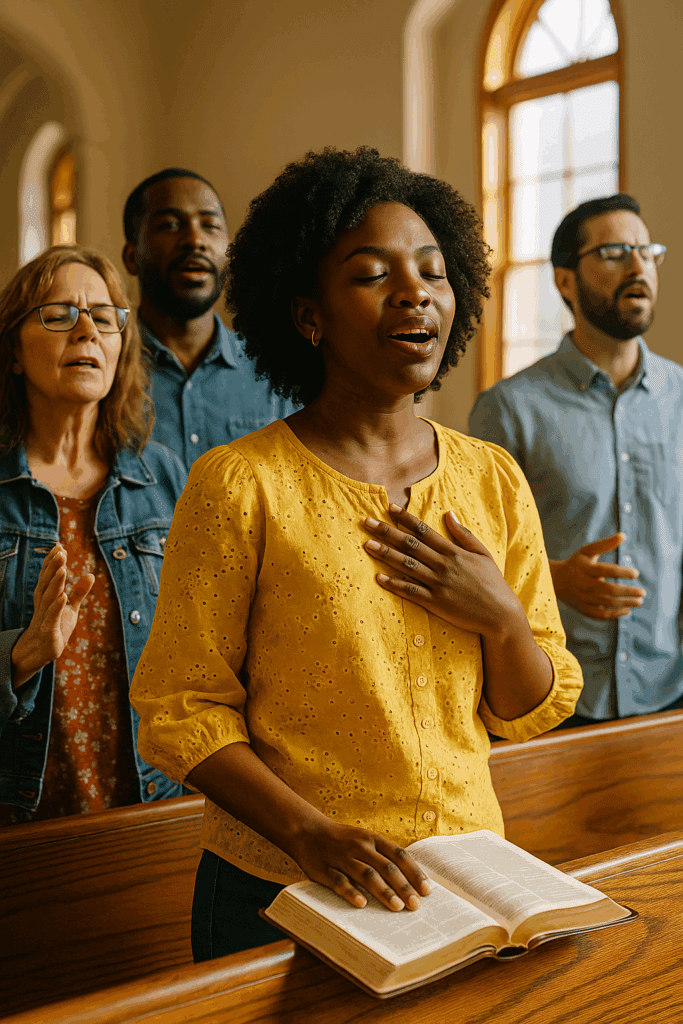
Some people believe God never intended her to lead. Others say yes, but only if no man is available. Still, others point to stories of women in Scripture who preached, taught, and even planted churches. This conversation refuses to fade away across the world. It spans from seminaries in the United States to small revival tents in Kanye.
But why does this question matter so much? Because behind it lies something more profound than policy or tradition. It’s about obedience to God’s design. It’s about the faithful use of spiritual gifts. It’s about honoring the image of God in both men and women. And in many churches, it’s also about challenging long-held assumptions—some shaped more by culture than Christ.
This post is not a battle cry for either side.
It’s an invitation to sit with the Word of God. Wrestle as Jacob did. Walk away with both a blessing and a limp. Whether you are a pastor, a teacher, or a church elder, I invite you to read with prayerful humility. If you are a seeker longing to understand God’s will, join me in this journey.
Let’s explore what the Bible teaches about women in ministry and how this question intersects with our culture in Botswana.
Complementarian View: Equal Worth, Distinct Roles
Complementarians start with a foundational truth: God created men and women equally in His image. They have equal worth, dignity, and purpose. Yet, this perspective suggests that God designed men and women to fulfill different roles. These roles are especially distinct in the home and the church.
This distinction is not about superiority or inferiority. It is about a God-ordained role. In a complementarian framework, certain leadership roles in the Church are reserved for qualified men. These roles include the position of elder or pastor-teacher. Women are encouraged to serve in every other capacity. These capacities do not involve spiritual authority over men in the gathered church.
Complementarians point to passages like:
- 1 Timothy 2:12–14, where Paul states, “I do not permit a woman to teach or to exercise authority over a man … For Adam was formed first, then Eve.” This grounds his argument not in culture but in the creation order and the Fall.
- 1 Timothy 3:1–2, where elders are described as “the husband of one wife,” implying male leadership.
- 1 Corinthians 11:8-9, “For man was not made from woman, but woman from man. Neither was man created for woman, but woman for man.” Paul reaffirms the creation order to support male headship in the church.
- Many interpret 1 Corinthians 14:34–35 as reinforcing male headship in worship gatherings. In this passage, Paul instructs women to stay silent in the church. Nonetheless, scholars continue to debate its meaning. Complementarians root male headship not in culture but in creation. They note that God first formed Adam and created Eve as his helper and partner, not his leader. They do not view this order as a statement of worth but as part of God’s divine structure.
The early Church Fathers overwhelmingly upheld a complementarian understanding of church leadership. They affirmed that men and women are equal in salvation and dignity. Nonetheless, they taught that God designed distinct roles for each within the Church. Tertullian, Origen, and Chrysostom interpreted Paul’s instructions in 1 Corinthians and 1 Timothy as timeless. They taught that women should not preach. Women should not hold ecclesiastical authority over men. Clement of Alexandria and Augustine emphasized order and virtue. They reinforced male leadership. They highlighted the created design of man as head and woman as helper. Some praised women’s spiritual contributions and prophetic gifts, like Chrysostom. Still, they insisted that qualified men should hold public teaching and pastoral oversight roles. These convictions were rooted in cultural assumptions and their sincere efforts to obey Scripture. For churches today, these writings serve as a theological foundation for those who uphold complementarian convictions.
In many churches across Botswana, countless women serve faithfully with deep devotion. They lead intercession nights, run the Sunday school, teach new believers, and minister to the sick. But they do not preach on Sundays. The senior pastor, a committed Bible expositor, affirms that Scripture restricts public teaching and spiritual oversight to men. He acknowledges that women are gifted but sees this limitation as obedience to God’s Word, not cultural convenience. One church elder explained it this way: “My wife is wiser than I am. Still, God gave me the responsibility to lead. He chose me not because I am better but because He called me to carry the weight.”
Bethlehem Baptist Church in the US, once led by Pastor John Piper, a key complementarian voice, exemplifies this view. Women serve in almost every ministry. This includes teaching other women and youth and providing counseling. Nonetheless, only men preach in Sunday worship. Only men hold elder roles. The aim is to show Christ’s servant leadership, not worldly patterns of power.
Complementarians would assert that “God’s order does not limit women; it protects and honors them. In a culture obsessed with titles and platforms, the Church should model humility, not competition.”
But what about women who seem genuinely gifted to lead, preach, or even plant churches? What if the Spirit is clearly at work in them? These questions lead us to the Egalitarian view, which we now turn to.
Egalitarian View: Equal Worth, Equal Calling
Egalitarians start where complementarians start. They hold the same conviction that God created both men and women equally in His image. But it goes further. It proclaims that God gives the Holy Spirit without discrimination. God also calls and empowers women for every level of ministry. This includes leadership, preaching, and teaching over both men and women. At the heart of this view is the belief that God distributes spiritual gifts by His grace, not by gender. If God gifts a woman to teach, shepherd, or plant churches, who are we to say He can’t call her? Egalitarians cite multiple passages that show God’s inclusion of women in significant ministry roles.
- Galatians 3:28 declares, “There is neither male nor female, for you are all one in Christ Jesus.” Egalitarians agree that this passage is primarily about salvation. It also teaches that all believers are one in Christ Jesus. This is true regardless of ethnicity, social status, or gender. It does not directly discuss ministry roles. Some egalitarians believe it implies that hierarchical distinctions based on those categories should not decide spiritual service.
- Acts 2:17 (quoting Joel) proclaims, “Your sons and daughters will prophesy….” This demonstrates the Spirit’s outpouring across both genders. It is meant for vocal ministry.
- Romans 16 commends several women, like Phoebe, a deacon, and Priscilla, who taught Apollos alongside her husband.
- Romans 16:7 (NIV) reads, “Greet Andronicus and Junia, my fellow Jews who have been in prison with me. They are outstanding among the apostles.” This means Junia was considered to be an apostle. It is, in a broader sense, a “sent one” or a missionary-church planter. Some readers interpret it as “known to the apostles.” They do this instead of identifying the person as an apostle. Most scholars lean slightly toward the apostolic reading. This is due to Greek grammar.
- Jesus broke cultural norms. He allowed women to learn at His feet. They engage in theological dialogue. Women were the first eyewitnesses to His resurrection. His ministry empowered, not silenced, women.
While most early Church Fathers affirmed male leadership, a few offered glimpses of a more inclusive vision. Some today view this as supportive of egalitarian principles. Notably, figures like Origen and Jerome acknowledged the prophetic ministries of women. These included women like Deborah, Anna, and Philip’s daughters. They affirmed that the Holy Spirit can empower women to proclaim publicly. Despite holding complementarian views overall, Chrysostom praised Junia as “not just an apostle.” He regarded her as prominent among the apostles, suggesting high regard for her ministry. Clement of Alexandria spoke of the equality of men and women in virtue and salvation. Early martyr accounts, like Perpetua’s, portrayed women as courageous spiritual leaders. They were models of faith. While these references do not form a systematic egalitarian theology, they show that the early Church addressed women’s spiritual authority. They reveal that the early Church was not entirely silent on this topic. There was influence as well. This allowed space for thoughtful dialogue. Women can be called and equipped by God for significant ministry roles. This is true even within a predominantly patriarchal context.
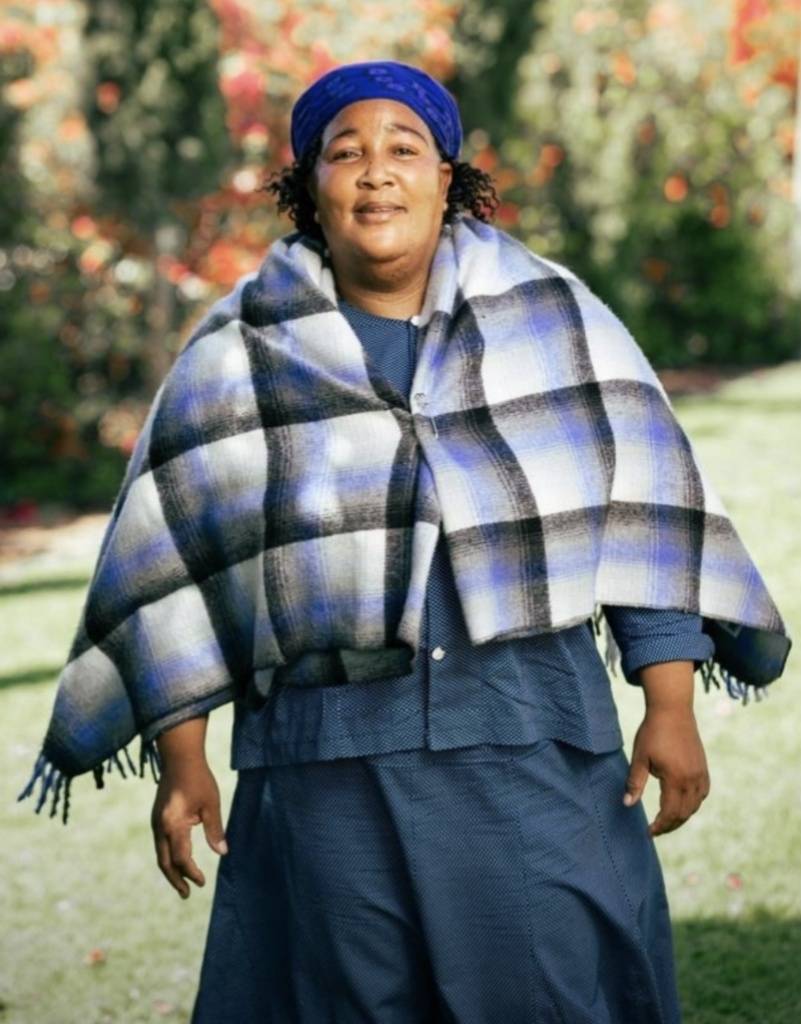
Many beloved and gifted women are leading thriving churches in our village of Serowe. One such woman who served faithfully for years is Bishop E.P. Nthebolan. Her father held to the complementarian view. Yet she asserted that the Holy Spirit compelled her to start her ministry. She said, “I have learned to trust God.” She began simply by gathering women for prayer. Then their children came. Then men. Soon, she was preaching weekly, administering the sacraments, and was known for her wisdom and knowledge of Scripture. Local pastors, even those with complementarian views, call her “a woman of God.” One young man who grew under her leadership shared, “She didn’t seek the title. The anointing was just too obvious to deny.” Egalitarians would argue that Bishop Nthebolang is not an exception but a fulfillment of the Spirit’s promise. God will use whoever is willing, male or female.
In the United States, Dr. Priscilla Shirer, an African American preacher and author, speaks to thousands. She’s trained in theology, faithful to Scripture, and widely respected across denominations. Some churches will not host her in their pulpits. Yet her preaching has transformed countless lives, both men’s and women’s. Her ministry raises the question: Should the Church restrict her if the Spirit uses her?
Dr. Gordon Fee is a New Testament scholar and co-editor of the NIV Bible. He emphasized that readers must interpret 1 Corinthians 14:34-35. In this passage, Paul instructs women to stay silent. This must be understood in light of 1 Corinthians 11:5, which states that women pray and prophesy in the church.
Fee wrote, “The gifts of the Spirit are gender-blind. To suppress them in women is to suppress the Spirit.” Dr. Craig Keener is a prolific scholar. He authored the IVP Bible Background Commentary. He has written extensively about women in the early Church. He believes that restricting women from ministry is a cultural reading. It is not a biblical one. He writes, “If God gave women the gifts to lead and teach, we sin when we forbid them [women] to use them [their gifts].” These men are known for both scholarship and reverence. They help frame the egalitarian view not as a modern rebellion. Instead, it is a faithful reading of the Spirit’s freedom and the text’s context.
Egalitarians often say that the Church should not quench the Spirit through gender restrictions. That is where the Spirit speaks, and the Church should listen, even when He speaks through a woman. The same Spirit who filled Peter at Pentecost also filled Mary. The same Jesus who sent the Twelve also commissioned women, like the woman at the well in John 4. Who are we to say who God can or can’t send? But egalitarians also face hard questions. If all roles are open to both genders, how do we interpret passages that seem to limit women’s teaching? How do we honor church order while remaining open to the Spirit’s movement?
This tension between text and Spirit leads us into the next crucial section. It examines how culture affects our interpretations. It also discusses how to tread carefully and wisely.
Cultural Layers: We All Have A Bias
Interpretation does not happen in a vacuum. We do not approach Scripture as blank slates but as people shaped by history, language, and culture. One key reason Christians divide over women in ministry is not that one side loves Scripture more. Instead, it is because we read Scripture through different cultural lenses.
In many African contexts, including Botswana, society is structured around honor and community harmony. Respect for elders, men, and tradition is a foundational pillar of peace and unity. Public leadership by a woman can be seen not merely as strange but as disruptive to community order. Even women feel deep inner conflict, fearing they will disgrace their families if they step ahead. Even today, many cultures do not welcome women stepping into leadership roles. The growing number of women taking on these positions does not change this. Female leadership is emotionally and socially costly. In such settings, people welcome biblical texts emphasizing submission. These include 1 Timothy 2 and 1 Corinthians 14. These passages make them feel safe. They preserve communal dignity and known boundaries. Nevertheless, egalitarians in Botswana argue that the very Spirit of God transcends culture. They point to powerful women in their communities. These women include Bishop Nthebolan. She has led hundreds to Christ and started house churches. She has also trained male leaders, often without formal recognition. “She never demanded a pulpit,” one elder said, “but heaven listens when she speaks.”
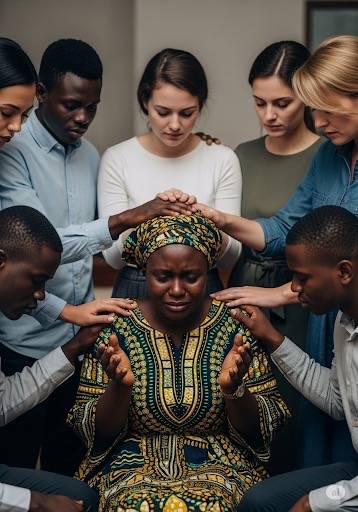
The crucial question arises: Are we limiting God’s work because it challenges cultural comfort? Or are we rightly preserving biblical order?
In many Western cultures, like the US, people are shaped more by an innocence-guilt worldview. They also have a strong sense of individualism. People often question authority and emphasize personal calling. When leaders tell a gifted woman she can’t preach because of her gender, she sees it as an injustice. She does not view this as a way of maintaining order. It is seen as a violation of her rights. She views it as an injustice and a violation of her rights. It affects her identity in Christ. Western egalitarians read Scripture through that lens, often interpreting limitations as cultural accommodations rather than divine commandments. Complementarians, conversely, argue that the church must not cave to cultural pressure. They believe it should uphold God’s timeless design, even when it is unpopular.
The real risk here is reverse cultural compromise. Where Botswana’s danger is suppressing Spirit-led gifts to preserve harmony, the Western danger overrides Scripture to protect autonomy. Both must ask the crucial questions: Are we obeying Christ? Or protecting our preferences?
Both views acknowledge that culture and Scripture intersect. The disagreement lies in how they interact:
Complementarians view the biblical pattern of male leadership as a countercultural expression of faithfulness.
Egalitarians view Spirit-filled women stepping into leadership as a step toward kingdom progression.
This trajectory began in Genesis. It continues into the New Creation, where every tribe, tongue, and person will serve before the throne.
Both groups seek faithfulness and obedience to the same Christ. The difference is not about the authority of Scripture but interpretive posture.
Bridging Differences by God’s Grace
The debate over women in ministry is not just a theological matter. It involves hearts, history, humility, and the Holy Spirit.
Both complementarians and egalitarians seek to honor Christ and obey Scripture. Nonetheless, they differ in how they interpret key passages, view authority, and apply truth across cultures. The danger is not disagreement; the threat is division without grace and silence where God has spoken.
We must remember that God’s Church is a body, not a battlefield. Every time we use gender as the battleground for spiritual usefulness, we risk silencing the voices. These are voices the Spirit has gifted and empowered. At the same time, we must never rush past Scripture in pursuit of relevance. We must never sacrifice truth for zeal.
So what do we do now? Whether you embrace complementarianism, support egalitarianism, or are still prayerfully seeking, you must walk the path ahead with wisdom. You must also continue with courage.
Your Everyday Footsteps
1. Test Every Gift by Its Fruit. Instead of asking, “Can a woman do this?” ask, “Is the Spirit working through her?” Jesus said we will know trees by their fruit, not their gender.
2. Refuse to Idolize Either Tradition or Progress. Tradition without love becomes tyranny, and progress without truth becomes rebellion. The Church must walk the narrow road where Scripture leads and the Spirit speaks.
3. Protect the Church from Silencing or Dividing. No one should silence a woman out of fear. No one should demonize a man for holding a different view. Let the Church become a place where people discern their calling, not dismiss it.
4. Embrace the Whole Counsel of God, Not Just Comfortable Parts. Many churches skip passages about female leadership or male headship. We must not cherry-pick texts that fit our biases. The entire Word of God must shape the whole people of God.
5. Be Willing to Follow God’s Calling, Even if It Costs You Everything. Whether you are a woman called to preach, you must be obedient. If you are a man called to support her, obedience often means stepping into risk. But when God calls, He also anoints, confirms, and provides.
In every culture and every generation, the Church must ask: Are we listening to God or just echoing ourselves?
The Church will not resolve the question of women in ministry by raising louder voices. A longer list of qualifications will not settle it either. Instead, it will find the answer when it kneels low enough to listen to the whisper of the Spirit. It must also show boldness in pursuing Christ wherever He leads. This remains true even when He surprises us.
“In the last days, I will pour my Spirit on all people. Your sons and daughters will prophesy…”
Acts 2:17 ESV
Discover more from Pastor James & Sister Wendie Clark
Subscribe to get the latest posts sent to your email.