
Unshakeable Allegiance: Bold Obedience in a World of Compromise

A call to courageous discipleship in a world ruled by tradition and opinion.
Across every culture and generation, one question echoes:
When tradition speaks and Christ commands,
whose voice will you follow?
This question is not just theoretical. It strikes at the heart of every believer’s journey. We wrestle with the demands of culture versus the call of Christ.
The tapestry of human experience is woven with threads of cultural identity. These are intricate patterns passed down through generations. They define who we are, how we think, and what we believe. From the rhythms of daily life to the deepest spiritual convictions, culture shapes our understanding of the world. Yet, when the call of Christ intersects with these deeply ingrained patterns, a profound spiritual challenge emerges.
Biblical redemption is not about cultural erasure, but transformation. God does not seek to destroy cultural distinctiveness, but to redeem and realign it with His divine purpose. Cultural transformation is not just a theological concept, but a lived reality. It means asking ourselves: How does the gospel reshape my view of family, work, and community? How does it influence the way I engage with others, especially when those traditions contradict God’s call? Throughout Scripture, we see a consistent narrative of God working within cultural contexts. He concurrently calls His people to a higher spiritual identity. This identity transcends human-constructed boundaries.
The theological foundation of cultural transformation begins in Genesis. God created humanity in His image. He established a profound truth. Our primary identity is not derived from cultural systems. Instead, it comes from divine design. This original blueprint reveals a crucial point. Culture can be a context for worship. But it should never become a substitute for a relationship with the Creator.
Jesus extends an invitation that transcends bloodlines, national customs, and ancestral traditions. His Kingdom is built not on human heritage, but on a radical foundation of obedience, holiness, and eternal truth. The Word of God speaks with authority. It cuts across every cultural boundary. It challenges us to align our deepest loyalties with divine purpose.
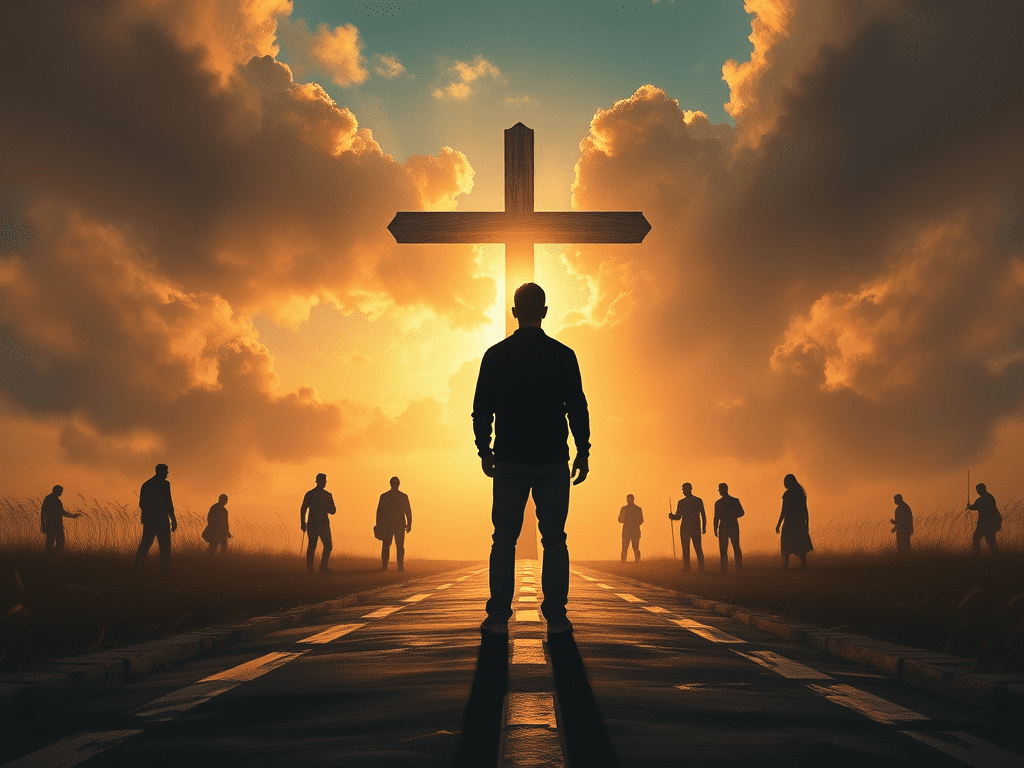
The moment of collision is inevitable. A time will come, maybe more than once, when the culture around you demands one path. Meanwhile, Christ calls you to follow another path. These are the crucible moments that reveal the true allegiance of our hearts. They are the fires that refine our faith. They burn away the dross of cultural compromise. These fires reveal the pure gold of spiritual conviction.
Honor God Above Culture
Even When It Hurts
The biblical narrative is filled with examples of faithful individuals who chose divine alignment over cultural conformity. These stories are not mere historical accounts but living testimonies of spiritual courage that speak directly to our contemporary challenges.
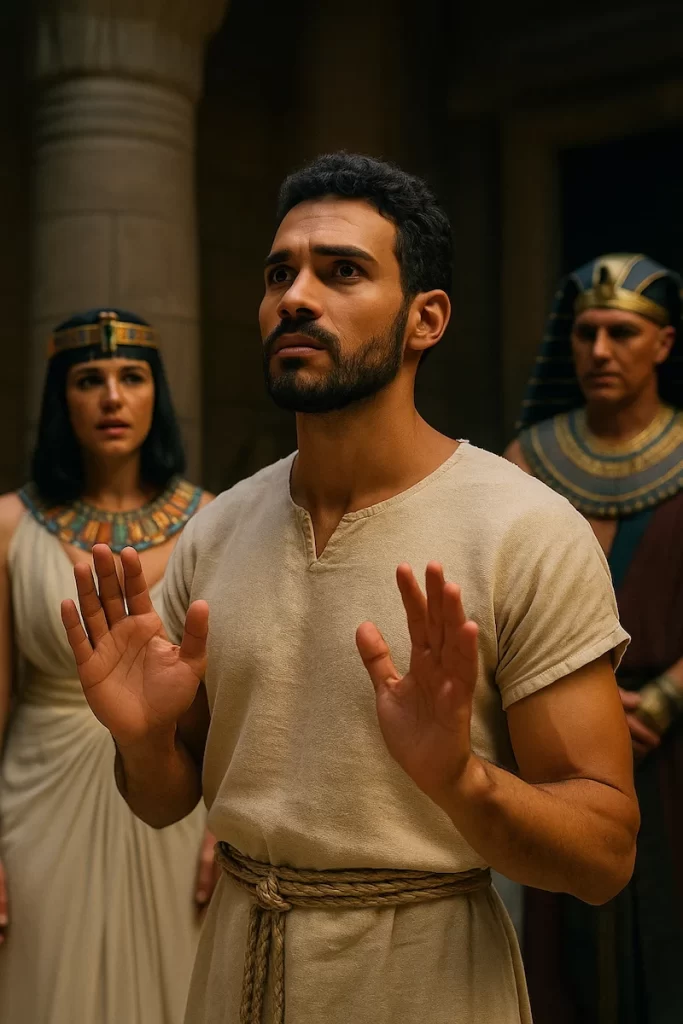
Consider the expansive narrative of Joseph, whose life demonstrates extraordinary cultural navigation. Joseph was sold into slavery by his own brothers. He was transported to a foreign land. Despite overwhelming cultural pressures, Joseph maintained his spiritual integrity. In Potiphar’s house and later in Pharaoh’s prison, he refused to compromise his character or his faith.
“How then can I do this great wickedness and sin against God?” ~~ Genesis 39:9, ESV
Joseph’s refusal to compromise wasn’t merely an act of personal integrity; it was part of God’s greater redemptive plan. His faithfulness in the face of overwhelming pressure made him a vessel through which God saved nations.
In a foreign land, under foreign power, Joseph held fast to God. He maintained his Hebrew identity in an Egyptian context. He interpreted dreams through divine wisdom. He ultimately used his unique position to save both his biological family and an entire nation. His life becomes a powerful metaphor for spiritual transformation within cultural systems. Joseph’s story shows us the quiet strength of integrity over time. But sometimes, cultural defiance demands a more public confrontation.
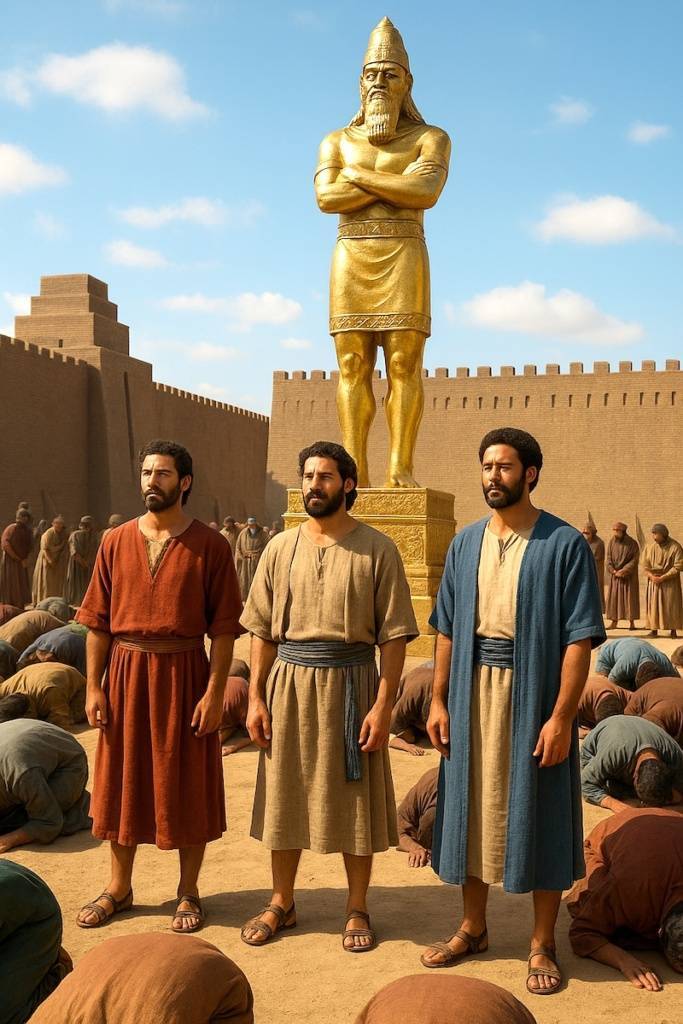
In the ancient courts of Babylon, there were three young Hebrew men. Their names were Shadrach, Meshach, and Abednego. They stood as a testament to uncompromising faith. They faced an impossible choice. They would bow to a golden image and save their lives. Alternatively, they stand firm in their devotion to the one true God. The cultural pressure was overwhelming. An entire kingdom had knelt in submission, yet these three remained standing.
“Our God whom we serve is able to deliver us from the burning fiery furnace, and he will deliver us out of your hand, O king. But if not, be it known to you, O king, that we will not serve your gods or worship the golden image that you have set up.” ~~ Daniel 3:17-18, ESV
Their declaration was more than a moment of personal defiance; it was a profound theological statement.
These young men understood that true worship transcends self-preservation. Their faith was not based on the hope of divine rescue. It was grounded in the unwavering conviction of God’s sovereignty, regardless of the outcome. While they stood firm in the face of public coercion, Naaman’s journey reveals a more subtle battle. There is an inner conflict between pride, culture, and the humility required for healing.
The story of Naaman the Syrian provides another nuanced example of cultural and spiritual transformation. A powerful military commander, Naaman sought healing from the Hebrew God, challenging his own cultural and religious assumptions.
His healing required not just physical immersion, but a profound spiritual surrender. Like Naaman, many today must confront long-held beliefs and practices. They do this when seeking the true and living God. To fully embrace God’s healing, they must let go of these beliefs. His journey wasn’t just about physical cleansing. It was about a profound spiritual transformation. This transformation required surrendering his identity to God’s will.
“Behold, I know that there is no God in all the earth but in Israel.” ~~ 2 Kings 5:15, ESV
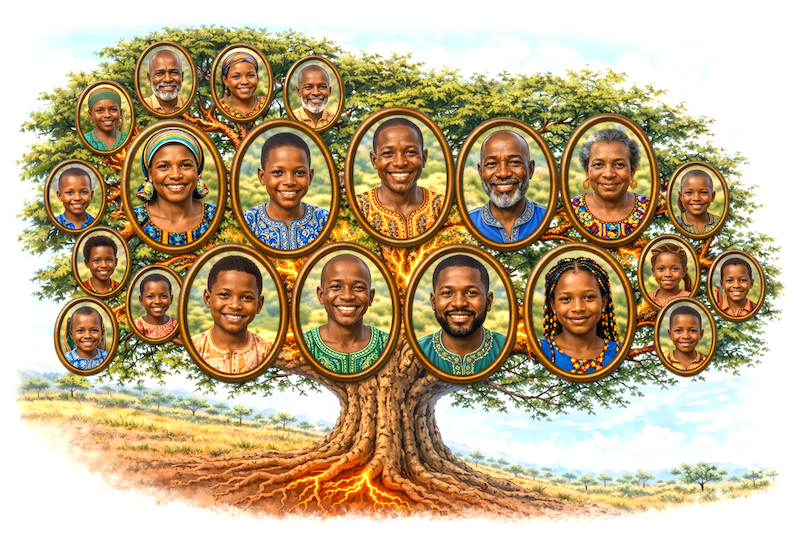
In the remote villages of Botswana, tribal traditions run as deep as ancient baobab roots. Similar stories of faith emerge. Young believers increasingly find themselves at the crossroads of traditional practices and Christian calling. They make choices that echo these biblical narratives of cultural resistance.
In Botswana’s rich cultural landscape, the tension between ancestral traditions and Christian faith is profoundly complex. The practice of badimo (ancestor veneration) reflects a deep-rooted spiritual challenge many believers face. Traditionally, badimo are perceived as intermediaries between the living and the supreme creator, Modimo. Families believe these ancestral spirits can bring blessings or curses, guide daily decisions, and preserve familial harmony.
This spiritual framework presents a profound theological challenge. The traditional Tswana belief system suggests that ancestors can intercede, offer guidance, and even punish or reward. This creates a complex spiritual ecosystem. It competes with the biblical understanding of divine relationship. Where Scripture declares Jesus Christ as the sole mediator between God and humanity, cultural practice introduces multiple spiritual intermediaries.
The intricate system of badimo operates on a fundamental assumption of ongoing spiritual connection with deceased family members. Families assert that these ancestral spirits continue to play an active role in their descendants’ lives. They need regular communication and respect. Sometimes, there are elaborate ritual practices. During significant life events like marriages and births, families seek guidance. They seek the blessings of these ancestral spirits during harvests and times of crisis.
This practice directly challenges the biblical mandate of exclusive spiritual devotion. The commandment to worship God alone becomes complicated. A cultural system views spiritual mediation as a complex, multilayered process. This involves multiple spiritual entities. Families find themselves navigating a spiritual landscape. Traditional practices seem to offer an immediate, tangible spiritual connection. In contrast, biblical faith requires a more abstract, faith-based relationship.
Honor God Above Tradition
Even When You’re Alone
Religious traditions can become barriers that obstruct genuine spiritual connection. They can calcify into systems that favor human interpretation over divine revelation. Traditions are not inherently wrong. In fact, they can be powerful expressions of our heritage. But when they replace or distort our relationship with God, they must be questioned. Jesus confronted this issue directly. He challenged the Pharisees. This showed us that no tradition, no matter how sacred, can take precedence over God’s commandments.
“You leave the commandment of God and hold to the tradition of men.” ~~ Mark 7:8, ESV
The prophet Jeremiah provides a compelling example of prophetic resistance against entrenched religious and cultural systems. Jeremiah was called from youth to speak uncomfortable truths. He faced consistent opposition from religious and political leaders. These leaders preferred comfortable traditions to divine challenge.
“Before I formed you in the womb I knew you, and before you were born, I consecrated you; I appointed you a prophet to the nations.” ~~ Jeremiah 1:5, ESV
Spiritual discernment requires continual engagement with Scripture. This engagement helps evaluate cultural practices through a biblical lens. It ensures that personal comfort never supersedes divine calling. Transformation begins with individual surrender to God’s will.
Like Jeremiah, who stood alone to proclaim God’s truth amid resistance, the apostle Paul demonstrates the cost of spiritual surrender. He also illustrates the power of spiritual surrender. A highly educated Pharisee steeped in religious tradition, he surrendered his entire cultural and religious identity to follow Christ. His transformation shows the most radical form of cultural defiance, a total reimagining of spiritual identity.
“For I have been crucified with Christ. It is no longer I who live, but Christ who lives in me.” ~~ Galatians 2:20, ESV
Paul’s transformation reminds us that faith often demands a break from even the most honored systems. This tension still exists wherever spiritual leadership intersects with cultural authority.
In Botswana’s traditional spiritual landscape, the role of the kgosi (traditional leader) extends far beyond political leadership. The kgosi is a spiritual guardian, a custodian of tribal traditions, and a critical link to ancestral wisdom. Traditional governance structures are deeply intertwined with spiritual practices. This creates a holistic system. Here, political, social, and spiritual domains are inseparable.
The kgosi’s spiritual responsibilities include performing critical rituals that keep community harmony. These involve rainmaking ceremonies, harvest blessings, conflict resolution, and spiritual protection for the entire community. When a kgosi conducts these rituals, community members are expected to join with unquestioning loyalty. This participation creates a spiritual framework that can compete with individual faith commitments.
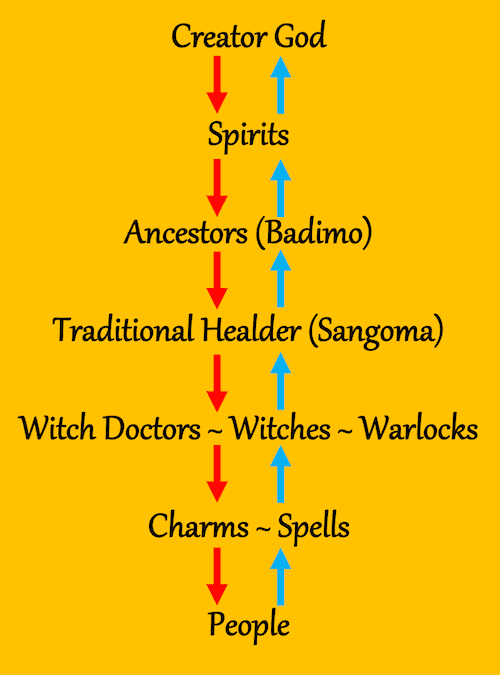
Traditional healing practices offer another critical point of spiritual tension. Sangomas (traditional healers) hold immense cultural and spiritual authority. They are believed to communicate with ancestral spirits, diagnose spiritual and physical ailments, and offer spiritual protection. Within traditional belief systems, consulting a sangoma is not merely a cultural practice but a perceived spiritual necessity.
This healing approach fundamentally differs from biblical principles of divine healing and spiritual protection. Traditional practices involve complex rituals, sacrifices, and spiritual intermediaries. In contrast, Christian faith offers direct access to God through Jesus Christ. It emphasizes divine healing through prayer and spiritual protection through the Holy Spirit.
As the complexities of cultural practices like bogadi (bride price) illustrate, the pressure to conform to tradition can be overwhelming. This traditional marriage custom involves the groom’s family paying a significant dowry to the bride’s family. Beyond its economic implications, bogadi is more than a trade. It is a deep spiritual and social covenant. This covenant significantly connects families, establishes social obligations, and maintains community harmony. Yet, when the world shames us for stepping outside cultural norms, we find strength in the enduring grace of God.
But this practice can create spiritual tensions. The biblical understanding of marriage as a covenant before God can be overshadowed by cultural expectations and social obligations. Young believers find themselves navigating a complex spiritual landscape where familial and cultural expectations seem to compete with spiritual calling.
Honor God with Endurance
Even When the World Shames You
In many cultures, shame is a powerful instrument of social control. Challenging ancestral practices or religious norms can result in total social rejection. The gospel, though, offers a revolutionary choice, a new identity that transcends cultural shame.
“Daughter, your faith has made you well; go in peace, and be healed of your disease.” ~~ Mark 5:34 ESV
Her story reminds us that even when the world rejects us, Christ receives us. Honor God with endurance; His grace will uphold you. Living with unshakable allegiance doesn’t just happen in big moments of cultural clash. It’s observed in our daily decisions. We decide how to engage with social media. We manage workplace ethics. We live out the values of the Kingdom in our homes and communities.
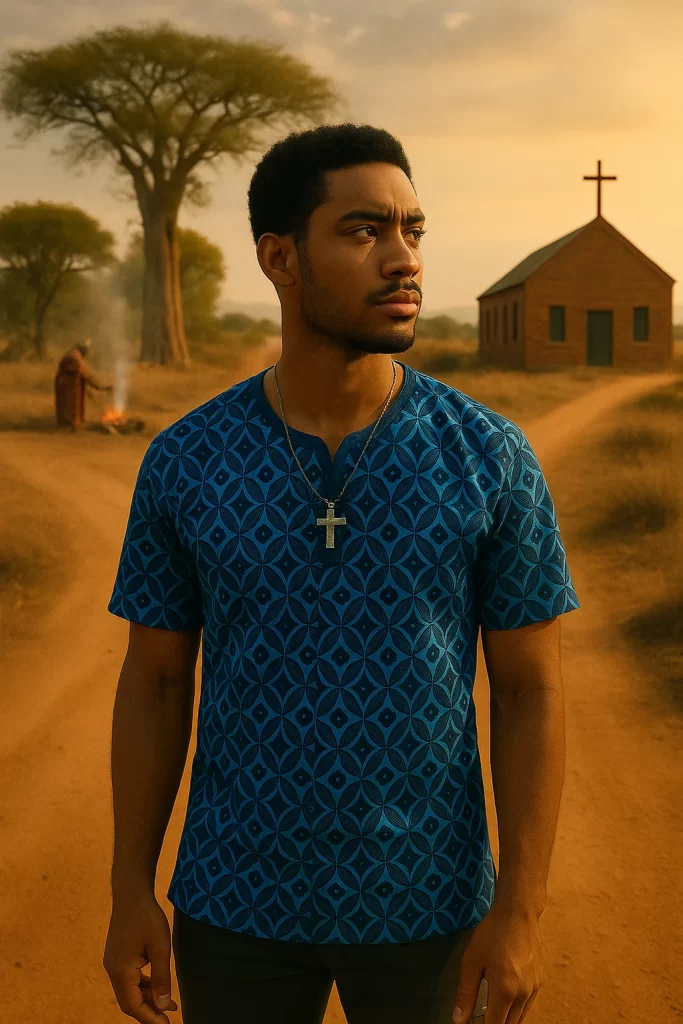
In Botswana’s social structure, shame is a powerful mechanism of cultural control. The concept of botho, emphasizing communal harmony, respect, and social conformity, can become a subtle form of spiritual manipulation. Individuals who challenge traditional practices risk not just personal shame, but potential community-wide consequences.
Traditional belief systems often frame spiritual deviation as a threat to community stability. Rejecting ancestral rituals is not seen as a personal choice but as a potential risk to familial and community well-being. The belief persists that failing to honor ancestral expectations results in spiritual punishment, economic misfortune, or social isolation.
This cultural framework creates profound spiritual pressure.
There is a temptation to practice a form of syncretistic faith. This involves blending traditional rituals and Christian practice. It occurs instead of pursuing full spiritual transformation. Young believers must develop sophisticated spiritual discernment to navigate these complex cultural waters.
The biblical narrative of Joseph provides a powerful parallel. Like Joseph navigating Egyptian culture while maintaining his faith, believers in this context must develop spiritual resilience. They learn to honor their cultural heritage while maintaining uncompromising spiritual integrity.
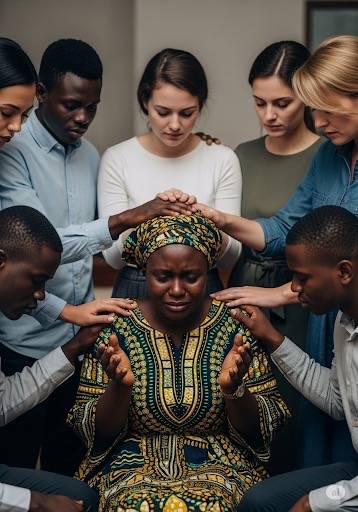
Even when you stand alone, the Holy Spirit empowers you to stay faithful. Like Jeremiah, who stood boldly in the face of opposition, we can rely on God’s strength to persevere.
Living with Unshakable Allegiance
Practical discipleship requires intentional spiritual formation. This journey involves several critical dimensions:
- Scripture Immersion: Develop a deep, consistent practice of engaging with the Bible.
- Spiritual Discernment: Cultivate sensitivity to the Holy Spirit’s guidance.
- Cultural Critique: Learn to evaluate cultural practices through biblical wisdom.
- Community Connection: Seek fellowship that challenges and supports spiritual growth.
- Missional Living: Embody Christ’s transformative power in your cultural context.
Discipleship isn’t just about personal growth. It’s about cultivating an unshakable allegiance to Christ. It’s about nurturing a faith that stands firm against cultural pressures.
“Do not be conformed to this world, but be transformed by the renewal of your mind.” ~~ Romans 12:2, ESV
The Holy Spirit empowers us to discern truth, reject cultural lies, and walk boldly in divine purpose. When culture calls you to conform, the Spirit calls you to transformation.
“We must obey God rather than men.” ~~ Acts 5:29, ESV
Will you honor God above all else, every day, in every circumstance, regardless of the cost? The call to unshakable allegiance is not just for the big, public moments; it is a daily choice. Will you live out that allegiance in your family, your community, your workplace, and your world? Your life becomes a prophetic statement, challenging cultural systems and revealing the transformative power of divine grace.
In every generation, God seeks those willing to stand at the intersection of culture and kingdom. These are the ones who will choose eternal purpose over temporary comfort. God invites us to a higher understanding. In the intricate dance between cultural identity and spiritual calling, we find a faith that honors our cultural context. Yet, it refuses to be limited by it.
The path of unshakable allegiance is not without its challenges. When we stand firm in Christ, our lives testify to the transformative power of His grace. This occurs in a world full of competing cultural voices.
What tradition or cultural value are you holding onto
And God asking you to lay it down?
“We destroy arguments and every lofty opinion raised against the knowledge of God, and take every thought captive to obey Christ.”
2 Corinthians 10:5, ESV
Discover more from Pastor James & Sister Wendie Clark
Subscribe to get the latest posts sent to your email.