
Covenant Freedom Rising: Practical Faith Destroys All Fear

In the quiet moments of life, questions arise that feel too heavy to speak aloud. These questions grow from repeated disappointments, family struggles, unexplained misfortune, and warnings passed down through generations. In Botswana, as in much of Africa, these questions connect with real experiences and cultural beliefs. When marriages fail despite prayer, people naturally look backward for explanations. When sickness lingers without reason, they wonder if ancestral displeasure has followed them. When children struggle despite faithful parenting, they question past actions or mistakes.
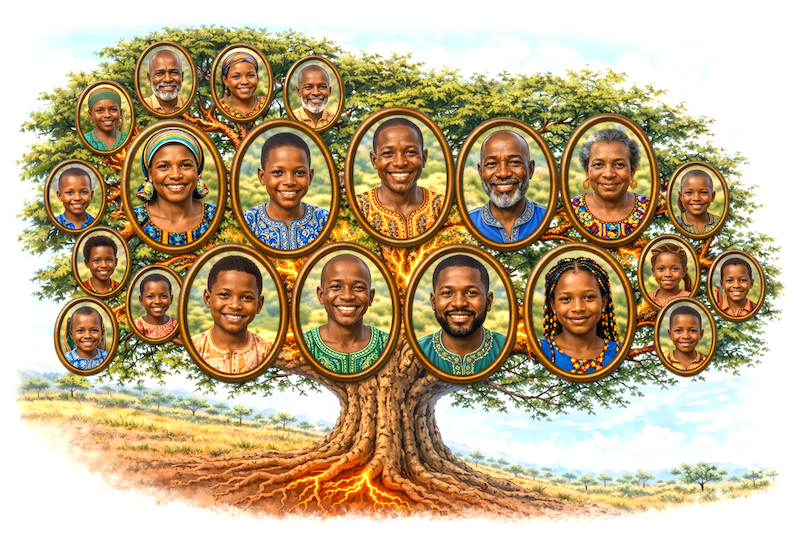
In many Batswana communities, fear of ancestors shapes daily life. Ancestors are believed to watch over families, land, fertility, and fortune. Harmony promises protection, and neglect invites trouble. Many families consult sangomas (traditional African healers or spiritual diviners) or use charms to influence unseen powers. They try to manage the spiritual world through rituals.
These practices show deep respect for tradition but often reinforce fear rather than bring peace. Ministry among believers demonstrates how this fear can subtly govern prayer, obedience, generosity, and hope.
Understanding Your Generational Authority
Fear can control decisions about marriage, parenting, leadership, and generosity. People follow rituals not out of devotion but to avoid danger. They make offerings to prevent loss rather than to express gratitude. They stay silent to avoid offense. In Botswana, many families believe that repeated illnesses, financial struggles, failed marriages, behavioral problems, or unexplained accidents come from ancestors. Families sometimes see repeated patterns in education or work as spiritual blocks passed down through generations. These beliefs shape daily choices and create hesitation, anxiety, and feelings of powerlessness.
The Bible gives a different vision of authority and fear. The fear of the Lord comes from our trust in God’s goodness and holiness. Proverbs 1:7 says, “The fear of the Lord is the beginning of knowledge; fools despise wisdom and instruction.” Where fear of ancestors limits life, fear of the Lord expands it. It offers wisdom, understanding, and freedom.
Exodus 20:5–6 says, “You shall not bow down to them or serve them, for I the Lord your God am a jealous God, visiting the iniquity of the fathers on the children to the third and fourth generation of those who hate me, but showing steadfast love to thousands of those who love me and keep my commandments.” God’s justice addresses persistent sin in a community. It does not mean people inherit guilt as a curse. It shows that blessing and discipline follow patterns of obedience and allegiance. God’s holiness and mercy are both at work.
Deuteronomy 24:16 says, “Fathers shall not be put to death because of their children, nor shall children be put to death because of their fathers. Each one shall be put to death for his own sin.” God’s judgment is not automatic or unfair. Repentance and covenant faithfulness stay decisive. These verses correct the notion that family hardships are automatic curses. Even when culture suggests ancestral punishment, God’s covenant love and individual responsibility define spiritual life.
Death in African spiritual thinking continues relational authority. The dead stay near, aware, and influential. This belief leads families to consult sangomas or use rituals to protect against misfortune. Charms, offerings, and silence try to control the unseen. Scripture teaches that these actions do not bring lasting peace. Christ entered human life fully. He shared our flesh and blood. His death broke the power of spiritual forces that once held humanity in fear. True freedom comes from Christ, not from rituals or appeasement.
Believers are not bound by ancestral fear. God holds real authority. His covenant faithfulness reaches across generations for those who love Him. Christians can live without fear of spirits, curses, or family patterns. Faithful obedience and prayer build courage. Scripture gives confidence for daily life even when cultural pressure pushes otherwise.
The first step in overcoming generational fear is to recognize where authority truly lies. God is sovereign over life, death, family, and community. Believers walk in obedience out of love and reverence for God’s holiness and mercy. Households and communities experience peace and freedom through Christ. Patterns of fear and misunderstanding, even those considered ancestral curses, can be broken. Families apply Scripture, prayer, and faithful obedience. They live in God’s authority. This demonstrates that life is defined by Him rather than fear.
Building Your Generational Faith
The Old Testament provides a clear framework for understanding God’s justice, mercy, and faithfulness in the covenant across generations. It shows that although the consequences of sin can ripple through families, God ensures accountability for each person. His mercy can break destructive cycles. For believers in Botswana, these Scriptures challenge fear-based views of ancestors. Scripture offers a lens of the covenant for interpreting life experiences and family patterns.
Ezekiel 18:20 declares, “The soul who sins shall die. The son shall not suffer for the iniquity of the father, nor the father suffer for the iniquity of the son. The righteousness of the righteous shall be upon himself, and the wickedness of the wicked shall be upon himself.” Ezekiel addresses the misunderstandings of generational punishment. Ezekiel emphasizes personal responsibility while acknowledging that sin’s consequences can ripple through families. God does not punish children arbitrarily for their parents’ sins. Instead, He calls each person to repentance and faithfulness.
Deuteronomy 5:9–10 reinforces God’s covenant promise. “You shall not bow down to them or serve them, for I the Lord your God am a jealous God, visiting the iniquity of the fathers on the children to the third and fourth generation of those who hate me, but showing steadfast love to thousands of those who love me and keep my commandments.” God is clarifying the balance between the consequences of sin and the consequences of covenant obedience. Patterns of sin within a community can have lasting effects. God’s steadfast love remains available to those who seek Him. His justice is relational and is grounded in His covenant, not arbitrary or mystical. For many African believers, this perspective shifts fear of ancestral displeasure into trust in a faithful God.
Proverbs 3:5–6 highlights the wisdom of trusting God. “Trust in the Lord with all your heart and do not rely on your own understanding. In all your ways acknowledge Him, and He will make your paths straight.” Cultural traditions can instill fear, but God calls for reverent trust.
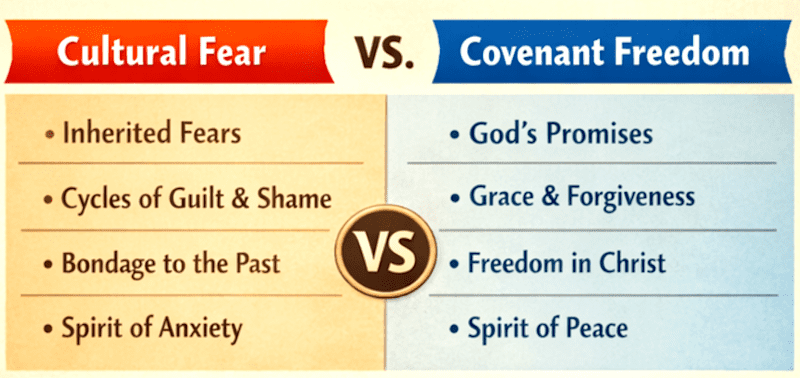
Knowing His character equips believers to navigate spiritual and social spheres with discernment, courage, and clarity. The fear of the Lord frees and strengthens. Fear of spirits or ancestors binds and restricts.
Numbers 14:18 shows the balance of justice and mercy. “The Lord is slow to anger and abounding in steadfast love, forgiving iniquity and transgression, but he will by no means clear the guilty, visiting the iniquity of the fathers on the children, to the third and the fourth generation.” Here we can clearly see the tension between consequences and mercy. Believers must respond with repentance and obedience rather than ritual appeasement or fear-driven practices. It also points ahead to Christ, who fulfills the law perfectly and secures redemption for those who trust Him.
Cultural engagement is critical in applying these truths. Among the Batswana, rituals, charms, and offerings often aim to control outcomes or placate unseen powers. These practices carry cultural significance but fail to produce lasting peace or spiritual freedom. Teaching God’s covenant principles offers a path from fear to faith. Households that embrace these truths experience restored relationships. They gain clarity in decisions. They have a model for making disciples of future generations. This model emphasizes the fear (honor, respect, profound reverence, and awe) of the Lord. This is instead of in ancestral dread.
The Old Testament also emphasizes the value of family and community. God often works through households to pass down wisdom, faith, and obedience. Deuteronomy 6:6–7 calls families to internalize His commands and teach them diligently to their children. God’s plan for generational faith relies on instruction, modeling, and living in the covenant. It does not depend on ritual appeasement or fear-based compliance. Believers guide families to replace fear-driven habits with regular engagement with Scripture, prayer, and mutual accountability.
Even in the face of sin or failure, God’s faithfulness in the covenant offers hope. The story of Israel repeatedly shows that obedience and faith unlock blessing while rebellion invites correction. Modern believers learn that redemption and blessing depend on trust in God’s covenant promises. They are not based on avoiding ancestral wrath. The Old Testament lays the foundation. Consequences exist, mercy is abundant, personal responsibility matters, communal influence is real, and redemption belongs to those who love God.
Claiming Your Generational Freedom
The New Testament shows that God’s plan of redemption reaches its fullest expression in Christ. He entered fully into human life. He shared our experiences and limitations. Through His death and resurrection, He brought freedom from spiritual fear, oppression, and destructive cycles. For believers, this truth is foundational. Freedom in Christ does not depend on rituals, charms, or appeasing ancestors. It depends on trust in God’s promises.
John 9:1–3 teaches that suffering is not always the result of inherited wrongdoing. The disciples asked about a man born blind. Jesus explained that neither his sin nor his parents’ caused the condition. God allowed it, so His works are revealed through it. Jesus dismantles the idea of automatic generational punishment. Personal or family struggles become opportunities for God’s grace to show His power. They are not evidence of ancestral wrath.
Galatians 3:13 emphasizes that Christ has redeemed believers from the law’s curse by becoming the source of atonement. Through His sacrifice, the consequences that sin imposes are broken. This opens the way for a restored relationship with God. Ephesians 1:18–23 describes the hope, spiritual wealth, and authority Christ gives believers. Their identity now rests in God’s power, not in fear of spirits or inherited oppression.
Colossians 2:14–15 shows that Christ’s work neutralized forces that opposed God’s people. Believers are called to live in the freedom this brings. Romans 8:1–2 reinforces this: “There is therefore now no condemnation for those who are in Christ Jesus. For the law of the Spirit of life has set you free in Christ Jesus from the law of sin and death.” These passages show that spiritual liberation is real, comprehensive, and practical in daily life.
Culturally, this message has profound implications. In many parts of Africa, many families still feel the weight of fear from ancestral practices and social expectations. Pastors and disciples can guide households to replace fear-based obedience with trust in the covenant. Practices like communal prayer, Scripture reading, and mentoring younger believers become channels of transformation. God’s freedom becomes tangible when households live out these habits.
Romans 8:38–39 highlights the permanence of this victory. Nothing in creation can separate believers from the love of God in Christ. Circumstances, family background, or cultural pressure can’t alter this truth. This empowers Christians to live boldly in faith. They can model obedience and love within families and confidently disciple future generations. Covenant faithfulness brings lasting peace and freedom.
New Testament teaching calls believers to engage intentionally in personal and communal spiritual life. Prayer, Scripture study, and accountability networks make freedom practical. Ancestral fear is transformed by faith in God’s promises. Obedience flows from love, not compulsion. Believers live confident, empowered lives and guide others to do the same.
Living Your Generational Renewal
The work of God in Christ is not only a historical event. It is also a current reality that transforms families. It changes communities and daily life. Living in generational redemption means walking in freedom. It requires intentionally modeling faith and making disciples of the next generation so God’s promises are fully experienced. These promises should be more than intellectual knowledge. In Africa, cultural patterns often emphasize ancestral influence. Families often believe repeated struggles, illness, financial hardship, or relational challenges mirror ancestral curses. Believers are called to show what living under God’s authority in the covenant looks like. They live under His authority rather than fear. They do not let tradition or social expectation define their choices.
Romans 12:2 offers this transformation. “Do not be conformed to this world,[a] but be transformed by the renewal of your mind, that by testing you may discern what is the will of God, what is good and acceptable and perfect.” Transformation begins in thought and belief. Generational patterns can shape habits, attitudes, and responses. Renewal of the mind through Scripture and prayer helps believers break cycles of fear. It replaces them with trust and obedience. Pastors and mentors play a critical role in guiding households in these practices. They help families respond to cultural fears in a biblical and obedient way.
Ephesians 6:4 reminds families to nurture and instruct children in the Lord with care and patience. Households can create daily environments where faith is modeled through conversation, prayer, and communal worship. Children learn that God’s authority, not ancestral fear, governs life. Colossians 2:14–15 teaches that the spiritual foundation has already been secured. Families can live with confidence and affirm obedience, integrity, and faithfulness.
Romans 15:13 emphasizes the role of hope and joy in sustaining generational redemption. “May the God of hope fill you with all joy and peace in believing, so that by the power of the Holy Spirit you may abound in hope.” Families and communities that embrace this hope cultivate resilience, generosity, and love. They replace anxiety and fear with confidence in God’s guidance. Generational transformation is not instantaneous. It becomes tangible when each member practices faith visibly and consistently.
Living generational redemption includes building consistent rhythms of family worship, sharing testimonies of God’s faithfulness, and mentoring younger believers. Households symbolically follow cultural practices that honor ancestors while placing ultimate trust in God. Common misconceptions can be corrected by showing that challenges are not curses but opportunities to obey God. For example, repeated financial hardship or illness can be addressed through prayer, wise action, and trust in God’s provision. Conflicts or patterns of relational struggle become chances to model forgiveness and love. By aligning biblical teaching with culturally sensitive engagement, believers show that faithfulness to the covenant brings peace. It also offers clarity and joy to households.
Romans 8:38–39 reinforces this reality. Nothing, not past family patterns, cultural pressures, or personal struggles, can separate a believer from God’s love in Christ. Living generational redemption involves daily obedience, communal teaching, and modeling faith that others can follow. Over time, these practices create a new legacy of trust, faithfulness, and courage. Fear is replaced with confident reliance on God’s promises.
Communities that embrace this vision of generational redemption experience renewed relationships, restored hope, and empowered households. Faith becomes active, relational, and visible. Children walk in freedom, parents model obedience, and communities see transformation as God’s authority in the covenant replaces fear-based traditions. Living in Christ’s victory is not abstract. It shapes decisions, character, and legacy every day.
Walking Your Generational Blessing
Generational redemption is not theoretical. It is a lived reality rooted in God’s covenant. Scripture reveals this truth, and Christ secures it through His life, death, and resurrection. The Old Testament shows how God’s justice and mercy move across families, offering both correction and blessing. The New Testament demonstrates the fullness of God’s redemptive plan. Christ’s work empowers believers to live free from fear. They can trust God’s love and model faithfulness to future generations.
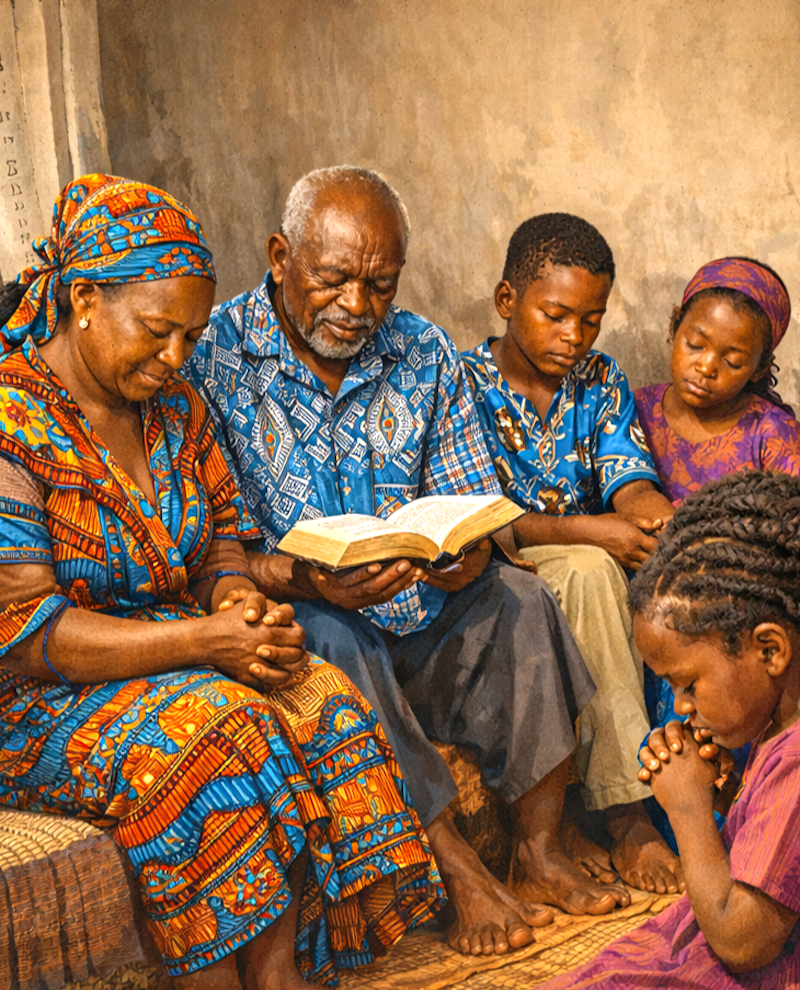
In Africa, cultural practices often emphasize the influence of ancestors and the role of rituals. These patterns can create fear, uncertainty, or reliance on human or spiritual intermediaries. God’s truth offers a better path. Believers are invited to replace fear with reverence, ritual with obedience, and uncertainty with trust in His promises. Faithful households read Scripture, pray, mentor younger believers, and worship together. These actions show children and communities that God’s authority in the covenant, not fear or tradition, guides life. Generational patterns of faithfulness develop as parents, leaders, and mentors model trust, courage, and obedience in practical ways.
Living in generational redemption requires intention. Families commit daily to Scripture, prayer, and godly guidance. Communities cultivate accountability and consistently apply biblical truths. As households embrace this calling, fear diminishes, hope grows, and God’s blessing flows. Transformation is relational, visible, and ongoing. Obedience and faith prove more powerful than ancestral patterns, societal pressure, or cultural expectations.
Your Everyday Footsteps
- Claim your freedom in Christ boldly today. Speak Scripture aloud. Declare God’s protection based on the New Covenant in Christ over your life and your family. Remind yourself that your identity rests in Him. It does not rest in fear or family history.
- Replace fear with focused prayer and reflection. When anxiety about past family patterns arises, pause to invite God’s peace. Write down His guidance and promises each day to renew your mind.
- Turn away from fear-driven rituals or practices. If you or loved ones have relied on charms, appeasements, or superstition, stop these practices intentionally. Commit fully to obeying God’s Word instead.
- Seek spiritual support and mentorship. Connect with mature believers, pastors, or small groups. Let them guide you in prayer, Scripture, and accountability. Their guidance helps you live confidently in God’s freedom.
- Model and teach freedom to the next generation.Share your testimony. Show obedience, courage, and trust in God. Children, relatives, and community members will see faith in action. They will learn to walk free from fear.
“The steadfast love of the Lord never ceases;
Lamentations 3:22–23 ESV
his mercies never come to an end;
they are new every morning;
great is your faithfulness.”
Discover more from Pastor James & Sister Wendie Clark
Subscribe to get the latest posts sent to your email.